
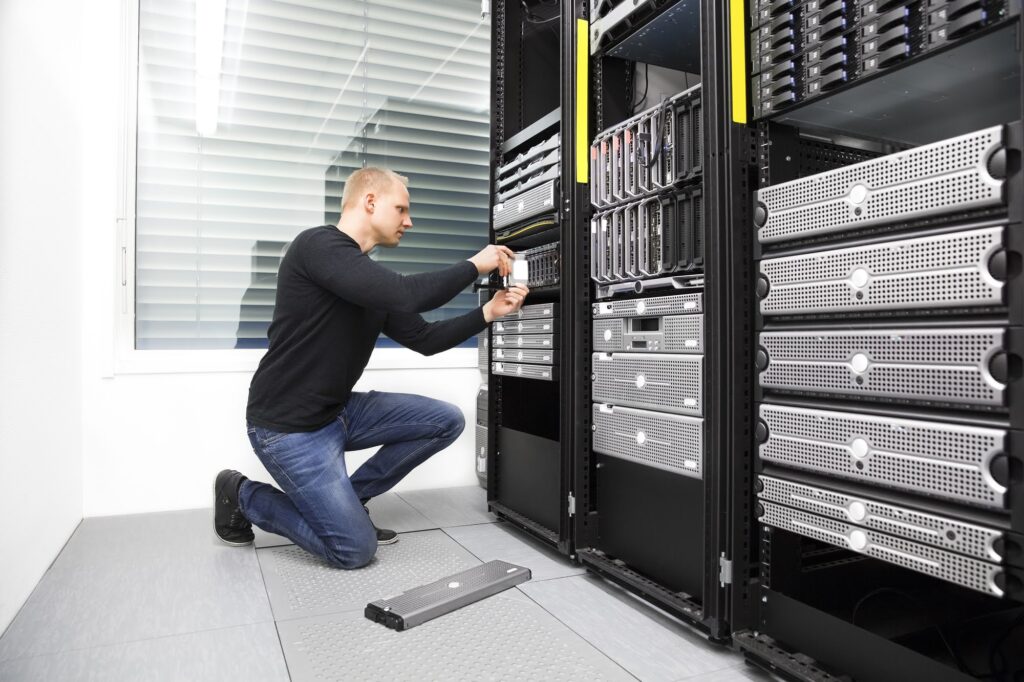
Data centers are the unseen engines of our digital world. They power cloud computing, online banking, e-commerce, streaming, and countless other services. Yet behind the smooth digital experience lies a constant battle against heat. Servers, networking equipment, and storage systems generate enormous amounts of heat, and keeping them cool is not as simple as running an air conditioner.
This article will explore the unique cooling needs of data centers, the innovations shaping their future, and the role professional maintenance plays in keeping operations reliable.
The Heat Challenges in Data Centers
Unlike office buildings or warehouses, data centers are packed with high-density racks of servers. Each rack can consume kilowatts of power, and nearly all of that energy turns into heat. Traditional HVAC systems struggle to handle this concentrated load. If cooling fails, even briefly, equipment can overheat, leading to downtime, data loss, or costly repairs.
The challenge is not just the amount of heat but also its distribution. Hot spots form quickly in server aisles, and uneven cooling can damage sensitive electronics. This makes precision cooling essential. The stakes are high: downtime in a data center can disrupt services across industries, from finance to healthcare.
The Limitations of Traditional Cooling Systems
Standard building cooling systems are designed for human comfort, not for machines. They regulate temperature and humidity across large spaces but lack the precision needed for server racks. In data centers, cooling must be targeted, consistent, and scalable.
Traditional systems also consume more energy when pushed to handle data center loads. This inefficiency drives up operational costs and increases environmental impact. For businesses running large facilities, the difference in cooling strategy directly affects profitability. Cooling is not just about comfort—it’s about protecting critical infrastructure.
The Precision Cooling Solutions for Modern Facilities
Data centers rely on specialized cooling methods tailored to their environment. These include:
- Hot aisle and cold aisle containment: Separating hot and cold air streams prevents mixing and improves efficiency.
- Liquid cooling: Using chilled water or refrigerants to absorb heat directly from servers.
- Raised floor systems: Distributing cool air through perforated tiles beneath racks.
These solutions are designed to keep equipment at optimal operating temperatures while minimizing energy waste. They also allow facilities to scale cooling capacity as demand grows. As data centers expand, cooling strategies must evolve to match the increasing density of equipment.
The Energy Efficiency and Sustainability of Cooling
Cooling accounts for a significant portion of a data center’s energy use. With rising energy costs and sustainability goals, efficiency is critical. Modern cooling systems use advanced controls, sensors, and automation to adjust airflow and temperature in real time.
Liquid cooling, for example, can reduce energy consumption compared to traditional air cooling. Containment strategies also improve efficiency by directing cooling exactly where it’s needed. These innovations help data centers meet environmental standards while lowering costs. For companies, efficient cooling is both a financial and environmental win.
The Monitoring and Control of Cooling Systems
Cooling in data centers is not just about installing equipment—it’s about constant monitoring and precise control. Modern facilities rely on advanced sensors and automation to track airflow, humidity, and temperature across every aisle. These systems provide real-time data that helps operators adjust cooling output exactly where it’s needed.
Monitoring ensures that hot spots are detected early, before they can damage servers or disrupt operations. Automated controls can increase cooling in high-demand areas while reducing it in zones with lighter loads, improving efficiency and lowering costs.
The Importance of Professional Maintenance and Services
Even the best cooling systems require expert maintenance. Dust buildup, clogged filters, and mechanical wear can reduce efficiency and increase risk. Professional technicians ensure systems run smoothly, extend equipment lifespan, and prevent costly downtime.
For businesses, partnering with specialists in data center cooling services provides peace of mind. It ensures that cooling systems are not only installed correctly but also maintained to meet the demands of 24/7 operations. Maintenance is not optional—it’s a critical part of keeping data centers reliable.
The Strategic Value of Cooling Investments
Cooling is not just a technical necessity—it’s a strategic investment. Reliable cooling protects valuable equipment, ensures uptime, and supports business continuity. It also impacts customer trust, since downtime in a data center can disrupt services across industries.
By investing in advanced cooling solutions and professional maintenance, businesses safeguard their digital infrastructure and position themselves for growth. Cooling is a foundation for resilience, efficiency, and long-term success.
The Future of Data Center Cooling
As technology advances, cooling strategies continue to evolve. Edge computing, artificial intelligence, and high-performance workloads demand even greater efficiency. Innovations such as immersion cooling—where servers are submerged in non-conductive liquids—are being tested to push efficiency further.
Sustainability will also shape the future of cooling. Companies are exploring renewable energy integration, heat reuse, and smarter automation. The goal is clear: keep data centers cool while reducing environmental impact.
Final Thoughts
Data centers demand a different kind of cooling because their needs go far beyond traditional HVAC systems. Precision, efficiency, and reliability are essential to protect equipment, reduce costs, and maintain uptime. Partnering with experienced professionals ensures that cooling systems are optimized and maintained for long-term success.
If you’re looking to boost your data center’s cooling performance, contact us today to learn how we can support your cooling needs and safeguard your operations.
Frequently Asked Questions
Why can’t data centers use regular air conditioning?
Regular air conditioning is designed for people, not machines. It cools large spaces evenly, but cannot handle the concentrated heat loads of server racks. Data centers need precision cooling to prevent hot spots and equipment failure.
What happens if cooling fails in a data center?
If cooling fails, servers can overheat within minutes. This can cause shutdowns, hardware damage, and data loss. In mission-critical facilities, even short downtime can lead to major financial and reputational damage.
Is liquid cooling better than air cooling?
Liquid cooling is more efficient for high-density environments because liquids absorb heat faster than air. However, air cooling remains common in smaller or less intensive facilities. Many modern data centers use a combination of both.
How does cooling affect energy costs?
Cooling is one of the largest energy expenses in a data center. Inefficient systems drive up costs, while advanced solutions like containment and liquid cooling reduce energy use. Efficient cooling directly impacts profitability.
Why is professional maintenance important for cooling systems?
Cooling systems run continuously and are subject to wear. Professional maintenance ensures filters, fans, pumps, and sensors work properly. It prevents unexpected failures and keeps systems operating at peak efficiency.